
Smyrna Previous Resident Sources
No single roll names every person who occupied a Smyrna home. The best source depends on the date and whether the goal is an owner, a householder, or a full family group. Current parcel data supplies the durable keys. Recorded deeds then carry the title back, while directories and census schedules add people who may never have owned the land.
| Source | Years It Covers | Where Held | What It Shows |
|---|---|---|---|
| Cobb real-property portal | Start date not published; index display reviewed through 2024 | Cobb Clerk portal and courthouse | Conveyances, parties, legal descriptions, book/page and CFN |
| Georgia recorded index | All counties at least since 1999; older data added | GSCCCA web search and courthouse terminals | Grantors, grantees, instruments and images where available |
| Marietta/Smyrna directories | Verified editions 1958-1970, plus later editions through 1987 | Digital Library of Georgia and Georgia Room | Householders, spouses, work, phones and addresses |
| Federal census | Public through 1950 | NARA and library databases | Households, relationships and geographic context |
| Local newspapers | 1955-1966 and 1989-1995 runs | Smyrna Public Library microfilm | Obituaries, transfers, family events and moves |
| Smyrna permits | Online intake since April 2022; earlier coverage not published | OpenGov or a city records request | Applicant, contractor and dated work at an address |
For a recent transfer, start with the Cobb assessor parcel search and the deed index. For a mid-century household, start with a street guide and compare the name against the nearest public census. An old title problem may require the clerk's deed room, index books, or a courthouse terminal. The result is strongest when two unlike records agree.
Start a Smyrna Resident Parcel
Enter the house number and street in the Cobb GIS property search. Leave out the apartment, city, state, and ZIP. Save the PIN, land district, land lot, jurisdiction, and link to the assessor report. The assessor record adds the indexed owner, situs address, owner mailing address, legal description, and deed or sale references.
The situs is the taxable location. The mailing address is only where tax notices go, so a mismatch does not prove who occupies the home. A PIN and legal description are far more stable than a postal label. They keep a previous-residents search on the right tract through annexation, redevelopment, or a changed street name.
Key point. Preserve the PIN, land lot, subdivision, lot, block, and legal description before following any name backward.
Smyrna Resident Deed Searches
The Cobb Clerk name search accepts an individual as last name followed by first name, without a comma. It can narrow by date, book type, book category, instrument type, and reverse name. Other portal paths search book and page, land description, street name, cross-reference, and clerk filing number, known as CFN. These choices matter when a common surname creates too many matches.
| Search key | Best use |
|---|---|
| Name and reverse name | Match both sides of one transfer |
| Book and page | Open a deed cited by a later instrument |
| CFN | Retrieve a filing by its year and sequence |
| Land description | Follow the same tract despite address changes |
| Street name | Find candidate records, then verify the legal description |
Save the recording date, execution date, instrument type, both parties, book/page or CFN, transfer details, and every prior cross-reference. A portal name hit is an index lead. The deed image or certified copy is the record to read when exact wording matters.
Note: The reviewed Cobb portal displayed index data through October 1, 2024, but did not state its earliest online year.
Trace Smyrna Resident Owners
A chain of title is the sequence of recorded transfers for one property. Work from the known present toward the unknown past. Match the land, not just the person. A seller may own several parcels, and two people may share a name.
- Copy the current owner, PIN, and legal description from the assessor report.
- Find that owner's acquisition deed with the current owner listed as grantee.
- Record the grantor, book/page or CFN, dates, and prior-deed reference.
- Search that grantor as an earlier grantee, then confirm the same land description.
- Repeat until the web trail ends, then move to the courthouse terminal or deed books.
- Grantor
- The party who conveys or burdens an interest.
- Grantee
- The party who receives that interest.
- Chain of title
- The linked sequence of transfers for the same land.
- Legal description
- The formal land identity based on such details as subdivision, lot, block, district, or land lot.
The trail may also show security deeds, liens, plats, and easements. Those instruments help date activity but do not all transfer ownership. Follow the instrument type and the exact land reference before adding a person to the owner timeline.
When Smyrna Resident Deeds End
The statewide GSCCCA real-estate index includes every Georgia county from at least 1999, with older material added over time. Web images and premium tools may require an account, but courthouse terminals remain an important free access route. The Cobb Clerk's Real Estate Division also keeps older books at its Marietta office. The deed room, indexing desk, and recording staff can help identify an old citation or correct an index problem.
Cobb's historical trail has gaps created by the 1864 courthouse fire. The Cobb County Genealogical Society records guide identifies substitutes such as tax digests from 1832, estate material beginning in 1837, a Land Lot Index for 1868-1938, and Will Books beginning in 1866. These are not a complete deed chain, but they can connect a family or tract across a loss.
The society's records guide is shown below. It points house historians toward surviving Cobb record groups rather than an unsupported Smyrna map series.
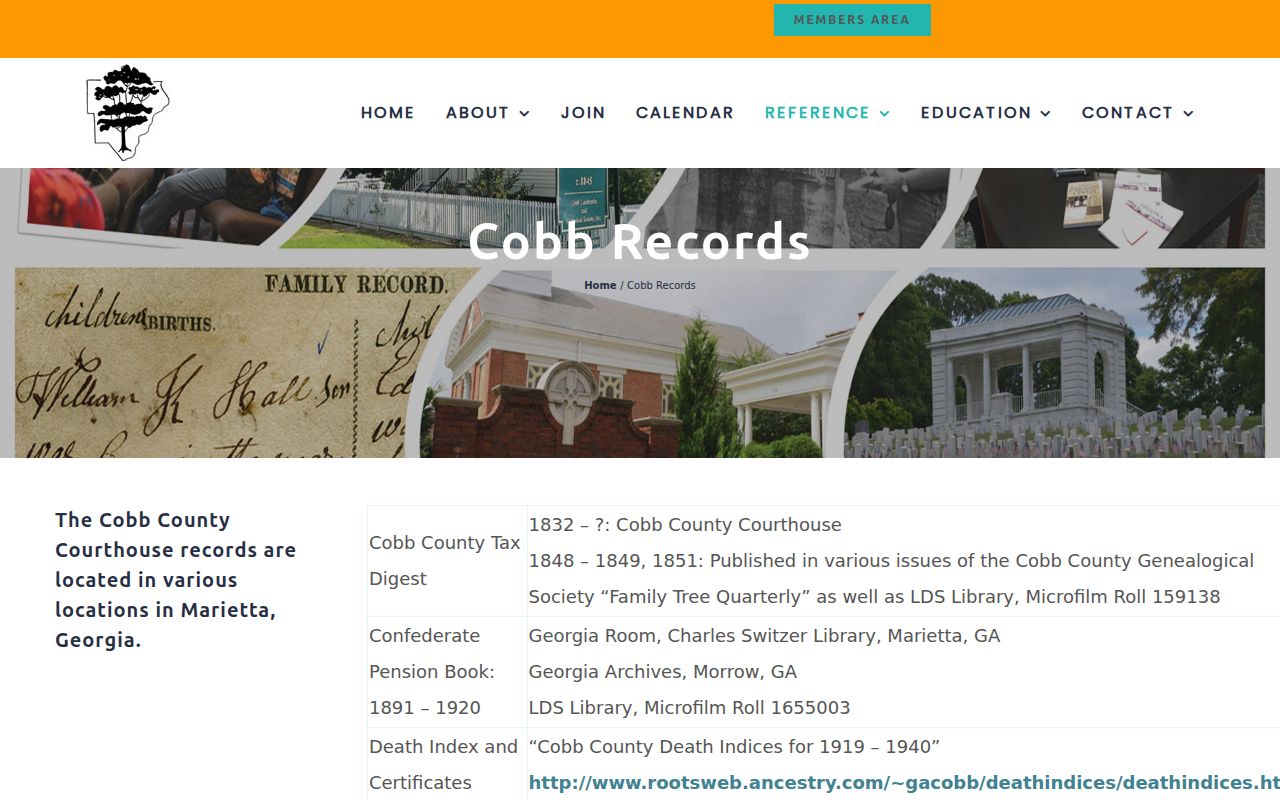
The image reinforces why older Smyrna address research often moves from deeds into tax, estate, marriage, and land-lot sources.
Bridge Smyrna Resident Directory Years
Verified Marietta/Smyrna directory editions begin in 1958 and continue through the 1960s, with later combined editions including 1972, 1975, 1977, 1985-86, and 1987. Street and avenue guides can reverse the usual name search: find the street, move to the house number, and read the named householder or business. The complete collections and their publishers belong on the Smyrna city directory page.
- Open a directory edition near the target date and search both the street guide and surname index.
- Copy the name, spouse notation, work, phone, address, and any owner or new-householder mark.
- Check the prior and next available editions to bracket arrival or departure.
- Compare a reasonable directory year with the 1950 census and note that the 1960 census remains closed until 2032.
- Use local newspapers, probate, and deeds to explain a death, move, inheritance, or transfer.
A disappearance is not proof that someone moved. The person may have been omitted, changed a name, died, or used a different postal label. OCR in the digitized scans is uncorrected, so inspect the page image before accepting a spelling or house number.
Smyrna Resident Trail Endpoints
The Isanhour Room holds the Smyrna Herald from November 1955 through April 1966 and the Smyrna Neighbor from April 1989 through September 1995 on microfilm. It also holds Garrett's Necrology, Georgia Death Index microfiche, census film, marriage microfiche, and newspaper abstracts. An obituary can connect a past resident to relatives, a later place, or an estate filing.
Probate is most useful after a death or inherited transfer. Search Cobb Probate Court for an estate or will, then return to recorded conveyances to see how title changed. Newspaper dates and directory entries help distinguish people with the same name. Cemetery and oral-history sources add context, but no official itemized Smyrna cemetery name database was located.
For more early Cobb source options, the genealogical society's publications include transcriptions and indexes for Deed Book A, cemetery volumes, census material, and marriages.
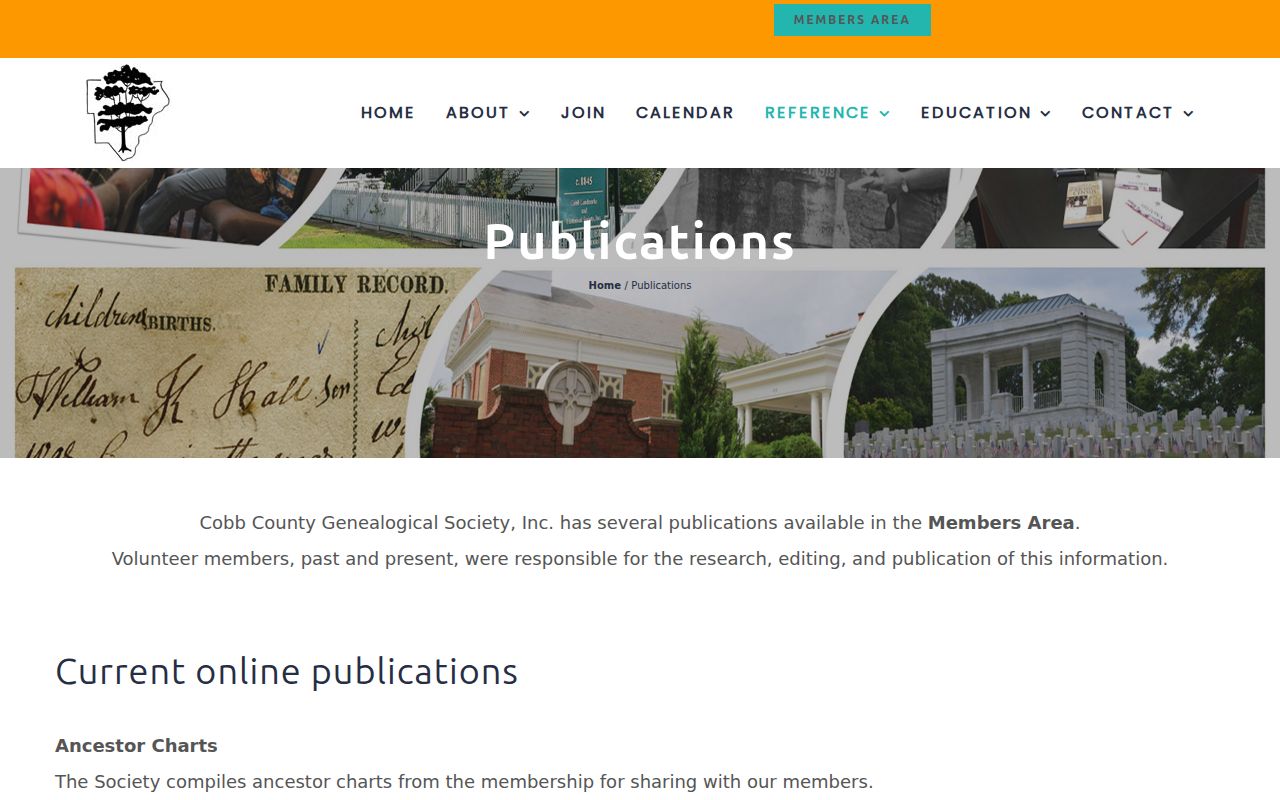
The publication list can supply a second path when a web index stops before the period under study.
Later Smyrna Resident Address Activity
Smyrna moved permit, licensing, and zoning applications to OpenGov in April 2022 and ended in-person submissions. Later files may date a renovation and identify an applicant or contractor. They do not prove that either person lived at the property. Older permit or addressing files may require a narrow city open-records request because the exact historic coverage is not published.
From January 2025, Georgia changed self-filed land instruments to require GSCCCA electronic filing with photo identity verification. That rule affects filing mechanics, not the earlier ownership trail. The official Filing Activity Notification System can alert a subscriber when a filing uses a monitored name.
The FANS enrollment screen appears below.
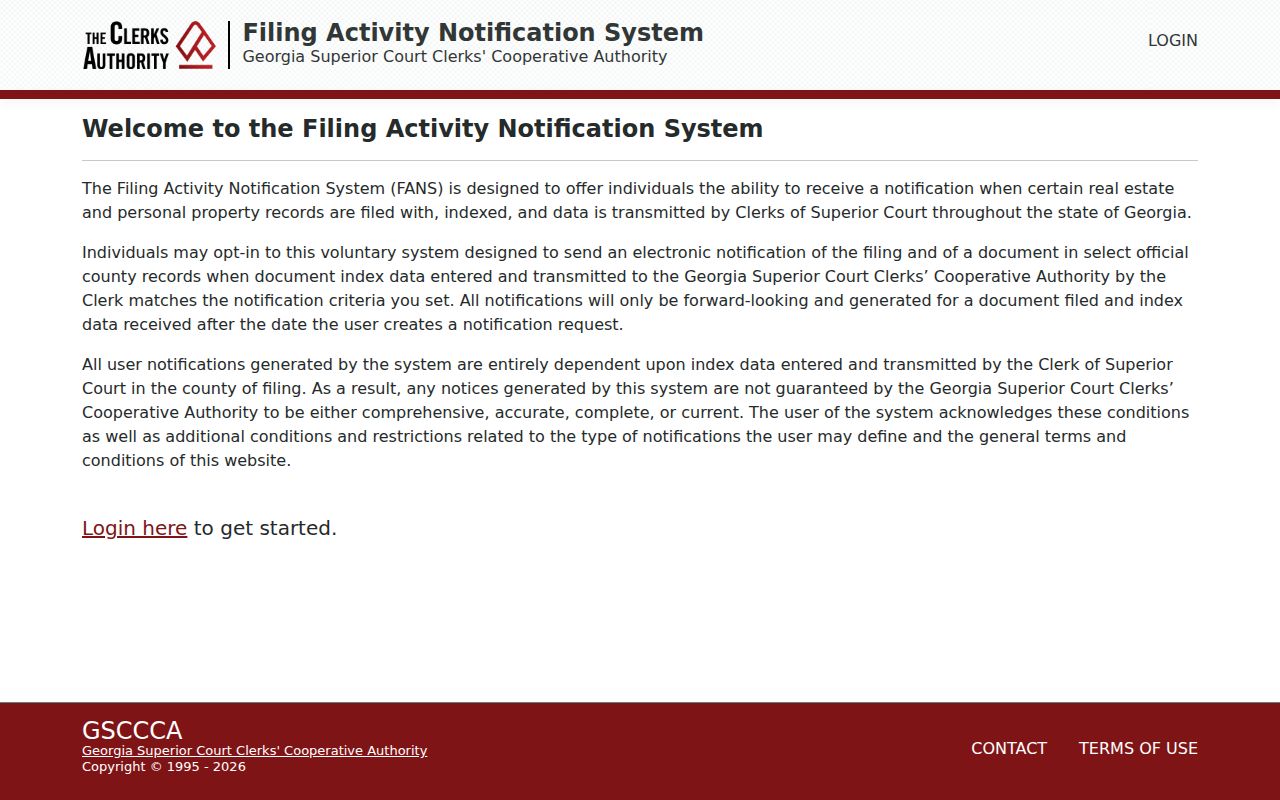
Alerts help monitor new activity, while deed images and clerk records remain the evidence for the chain itself.
Note: A permit applicant, contractor, taxpayer, or deed party should not be labeled an occupant without a separate household source.
Smyrna's Missing Sanborn Shortcut
No reviewed official catalog exposed a Smyrna-specific Sanborn fire-insurance atlas. Verified Cobb county-seat editions cover Marietta, not Smyrna. Do not place a Smyrna address on those sheets or imply that they fill the local house-history gap. For an older Smyrna site, rely on deeds, plats, legal descriptions, directories, census schedules, permits, newspapers, and staff help at the Isanhour Room or Georgia Room.
Redevelopment can also change the evidence without a citywide renumbering. Smyrna sources describe Village Green work beginning in 1988, the library and community center dedication in 1991, and Market Village opening in 2002. No verified Smyrna-wide street-renumbering year was found. Treat a changed address as a question to solve with plats and land keys, not a date to assume.
Confirm Smyrna's Past Households
Owners are only one part of the record. A reverse directory can name a householder at an address, and a census can show a related family group. Neither is complete. Printed directories omitted some people, minors, recent moves, and unlisted phones. Census access follows the federal 72-year rule and depends on finding the correct enumeration area and page.
Build a dated timeline with a source beside each name. Mark owner, directory householder, census household member, permit party, and obituary subject as different roles. When two records conflict, keep both readings until a deed image, scanned directory page, or other primary record resolves the point. That discipline makes a search for who lived here before useful for family history, estate work, and local history.
Lawful use. Research previous residents for house history, family history, or estate work. Never use an address trail for threats, fraud, repeated unwanted contact, stalking, or harassment.